Entering the world of financial markets can feel overwhelming for beginners. A solid foundation is essential for long-term success. Many new participants seek a safe way to learn before using real capital.
For over 16 years, one established firm has provided a solution. It offers a simulated platform that mirrors real-world conditions. This environment allows users to start trading with zero financial risk.
Participants gain access to a vast selection of global assets. The platform features over 12,000 instruments for practice. This variety helps users understand different market dynamics.
Using virtual funds, individuals learn platform mechanics thoroughly. They can test strategies and build confidence without pressure. This step is especially valuable for residents of Thailand exploring online opportunities.
This guide explains how to begin your educational journey. It covers the essential steps to navigate modern markets with greater assurance.
Introduction to the World of Demo Trading
Before committing real capital, every novice must explore a simulated financial environment. This practice phase is a cornerstone for understanding global markets. It provides a safe space to learn the mechanics of trading.
Why Practice Trading Matters
Every aspiring trader needs to build essential skills. Volatile markets demand a tested system. Experienced traders consistently recommend this approach.
It prepares individuals for the psychological pressures of real decisions. They can make mistakes without losing savings. This builds genuine confidence for future steps.
Benefits of Risk-Free Trading with Virtual Funds
Using virtual funds offers several key advantages. A practice account mirrors live price movements accurately. Users gain valuable information on instrument behavior.
- It allows for strategy testing in real-world conditions.
- Users refine their decision-making process safely.
- The controlled environment is ideal for mastering risk management.
- It ensures full preparedness before transitioning to a live account.
This foundational step is especially crucial for building long-term trading competence.
Setting Up Your Demo Account in Thailand
Residents of Thailand can begin their market education by completing a simple online registration and verification procedure. This foundational step creates a secure practice profile and unlocks the platform’s full functionality.
Step-by-Step Registration Process
To open a trading account, one must first register in the secure Members Area. The process is intuitive and designed for speed.
New users can access virtual funds within minutes of signing up. This immediate access allows them to start trading and explore global markets without delay.
Understanding Verification and Currency Options
Verification is a compulsory condition for security. It protects the user’s profile and is required before any live activity.
Choosing the right base currency, like USD or EUR, is a critical decision. This helps avoid unnecessary conversion fees later on.
Once verified, a trader can make a deposit as low as 10 USD. This small amount is enough to transition from a demo account to a real account. Proper setup ensures access to additional platform benefits.
Navigating the Trading Platforms and Tools

The tools and platforms a trader uses can significantly influence their learning curve and eventual success. Modern software provides the essential environment to practice and execute orders. Two primary terminals, MetaTrader 4 and MetaTrader 5, serve as the core platform for this activity.
They grant access to a vast selection of over 12,000 instruments, including global stocks and indices. This variety is crucial for understanding different market behaviors.
Overview of MetaTrader 4 and MetaTrader 5
MetaTrader 4 remains the most popular choice for those new to trading. Its interface is user-friendly and comes with extensive educational resources. This makes it ideal for a beginner to comfortably start trading.
More advanced users often prefer MetaTrader 5 for its superior analytical tools. It also allows participation in a wider range of financial markets. Each terminal offers unique features for testing methods in a demo account.
Accessing Advanced Features on RoboForex Platforms
Both platforms include built-in tools like strategy builders and one-click execution. These features help streamline a user’s workflow and improve order speed. They are perfect for refining an approach before using a live profile.
Comprehensive information on each terminal’s specifications is readily available. This data helps individuals choose the software that best matches their specific style. Understanding these tools is a key step in building lasting competence.
Choosing the Right Account and Leverage Options
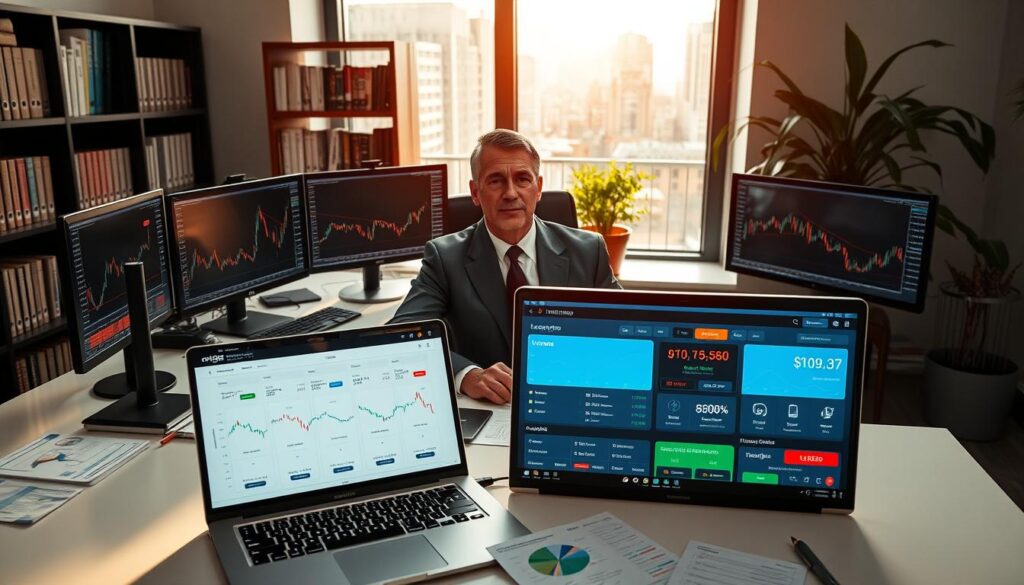
The choice of a trading profile and leverage can define one’s early experience in the markets. Selecting the correct configuration aligns your goals with ideal market conditions.
Comparing Account Types: Prime, Pro, ProCent, ECN, and R StocksTrader
Each profile type serves a different purpose. The ProCent option is designed for those wishing to start trading with small sums, using cents as the base currency.
A minimal deposit of 10 USD is possible here. Other types, like Prime or ECN, cater to more advanced strategies with different spreads.
They offer access to a wide range of instruments across global financial markets. The R StocksTrader profile provides unique functionality for stock enthusiasts.
Leverage allows control of larger positions with less capital. Some practice configurations offer ratios as high as 1:2000.
When moving to a real account, beginners are advised to use leverage below 1:100. This helps manage risk while learning.
Understanding these options ensures a smoother transition from a demo account to a live trading account.
Developing Effective Trading Strategies on a Demo Account

The core of sustainable market participation lies in two pillars: risk control and systematic execution. A simulated environment is the ideal place to build these skills. It allows for methodical development without financial pressure.
This phase focuses on translating knowledge into a repeatable plan. The goal is to create a framework that works across different financial markets.
Risk Management Techniques for Beginners
Protecting capital is the most critical skill a participant can learn. Experienced traders consistently highlight this. They recommend risking only a small percentage of total funds on any single position.
A common rule is to use just 2-3% of your deposit per trade. This limits exposure during inevitable losing streaks. Building this discipline in a demo account makes it second nature.
A robust system for managing leverage and stop-loss orders is essential. It is the foundation of long-term profitability.
Practice Trading Strategies with Virtual Funds
Testing different strategies reveals what works for your style. You can see how an approach performs in both bullish and bearish markets. This practice helps identify weaknesses before real capital is involved.
Patience is a virtue often learned here. New participants must learn to wait for high-probability signals. Over-trading is a common mistake that virtual practice can help eliminate.
The ultimate aim is to reach a point of consistent, emotion-free execution. A trader should be able to follow their plan without interference.
Key elements to practice with virtual capital include:
- Limiting trade size to a strict percentage of your balance.
- Testing entry and exit rules across various asset classes.
- Recording results to analyze what creates winning and losing trades.
- Simulating the psychological pressure of a live real account.
Mastering these aspects on a platform like the roboforex demo account builds genuine confidence. It prepares you thoroughly to start trading with real money.
Transitioning from a Demo to a Live Trading Account
The shift from simulated to live conditions marks a significant milestone in a participant’s development. This move requires careful planning and a solid psychological foundation.
It is the step where theory meets the reality of market pressures.
When to Consider Switching to a Real Account
A common benchmark is achieving stable profits for two to three consecutive months. This consistency proves a system works.
If one cannot profit with virtual funds, they are likely not ready for a live trading account. The practice phase must build genuine competence first.
Adapting Your Strategy for Real Money Trading
The psychological pressure of real capital is the primary challenge. Emotional control becomes paramount.
Experienced traders stress a disciplined approach to their strategies. One must account for real-world factors like execution speed.
Maintaining a strict money management plan is the best way to ensure sustainability. It is wise to use lower leverage when you start trading with real money.
This disciplined adaptation turns practice into lasting profitability.
Mastering the roboforex demo account for Skill Building

Utilizing every feature of a practice platform transforms basic knowledge into actionable trading competence. True mastery involves engaging with the full suite of analytical tools provided. This includes the economic calendar and advanced market analysis features.
The firm’s commitment to quality resources was recognized in 2024. It won the Best Partner Programme award. This highlights its dedication to supporting users at every level.
Engaging with the partner program opens doors to valuable resources. Individuals can access top-rated strategies and copying services. This can significantly improve a participant’s results in various financial markets.
The platform delivers comprehensive information through integrated client tools. These resources cover market holidays, trading hours, and contract specifications.
Key tools for skill development include:
- The economic calendar for tracking major market events.
- In-depth market analysis to inform better decisions.
- Access to a partner network for strategy sharing.
- Real-time data on a wide range of instruments and currencies.
By leveraging these features, a trader builds a robust system. This prepares them thoroughly for the transition to a real account. It turns simulated practice into a foundation for lasting success.
Avoiding Common Pitfalls in Demo Trading

The simulated environment, while safe, can foster habits that undermine future success if not approached correctly. Many individuals treat this phase with less seriousness than a live trading account. This mindset is a primary reason some struggle when they start trading with real capital.
Overcoming Overconfidence and Emotional Triggers
Overconfidence is a frequent trap. With virtual funds, a trader might take risks they would never consider with real money. This builds a false sense of security.
Emotional triggers, like the urge to recover losses quickly, can derail a solid plan. Experienced traders know that discipline is the real challenge. Sticking to a tested system is vital.
Treating every practice position with professional seriousness is crucial. The demo account is a tool for building a sustainable trading system, not a game.
Key practices to avoid these pitfalls include:
- Using realistic position sizes, as you would on a real account.
- Resisting the temptation of excessive leverage just because it’s available.
- Keeping a detailed log of all decisions and their outcomes.
- Simulating the emotional pressure of real-market conditions.
By maintaining this disciplined mindset, traders ensure their skills are genuinely prepared for live trading. It turns practice into a reliable foundation.
Final Steps to Launch a Successful Trading Journey
Embarking on a journey in the financial markets requires a clear roadmap and disciplined execution. The final step is to open a real account and apply the risk management rules you mastered.
Ensure you have fully utilized your practice phase to test strategies. This preparation is crucial before you start trading with actual capital. Consistent success hinges on ongoing learning and adaptation.
Stay committed to your trading plan and control your emotions. By following this structured path from practice to a live trading account, you build a foundation for long-term growth.
The journey transforms learned skills into sustainable professional development. Keep refining your approach as you gain real-world experience.