For investors in the United Kingdom, finding a platform with low costs is a top priority. Every pound saved on fees directly boosts potential profits. This analysis takes a close look at the pricing environment offered by a well-established firm.
The broker in focus, IC Markets, began operations in 2007. It holds multiple licenses and provides a vast forex offering. Traders can access over 61 different currency pairs.
Our objective is to examine how competitive their cost structure truly is. We want to see if it provides better value compared to other major global platforms. Understanding these nuances is essential for anyone serious about their financial activity.
The right pricing can significantly influence your bottom line. This holds true for both newcomers and seasoned professionals. We conducted a thorough assessment of the platform’s fees to give you clear insights.
Knowing where you stand on costs helps maximize returns. It also helps in minimizing unnecessary expenses during your trading sessions. Let’s delve into the details of what this broker provides.
Overview of IC Markets and Its Trading Environment
Operating since 2007, the firm has grown into a significant entity within the online trading sphere. Its evolution from a single entity to a global network is a key part of its story.
History and Regulatory Background
The broker began operations in 2007. It is currently a subsidiary of Raw Trading Ltd.
Over the years, it has established a strong regulatory foundation. This includes oversight from authorities like ASIC.
The platform’s commitment to safety is reflected in its high Trust Score of 83. This score signals a transparent and secure framework for all clients.
Global Presence and Market Reach
Its services are delivered through entities based in Australia, Cyprus, and the Seychelles. This structure allows it to cater to an international audience.
Traders get access to a vast selection of 3,583 financial instruments. This diversity meets the needs of a global customer service base.
Management, including figures like Andrew Budzinski, has focused on providing high liquidity. This focus ensures consistently competitive conditions for users.
The robust regulatory framework protects participants across different jurisdictions. It creates a reliable environment for financial activity.
ic markets spreads review: Understanding Account Types and Fees
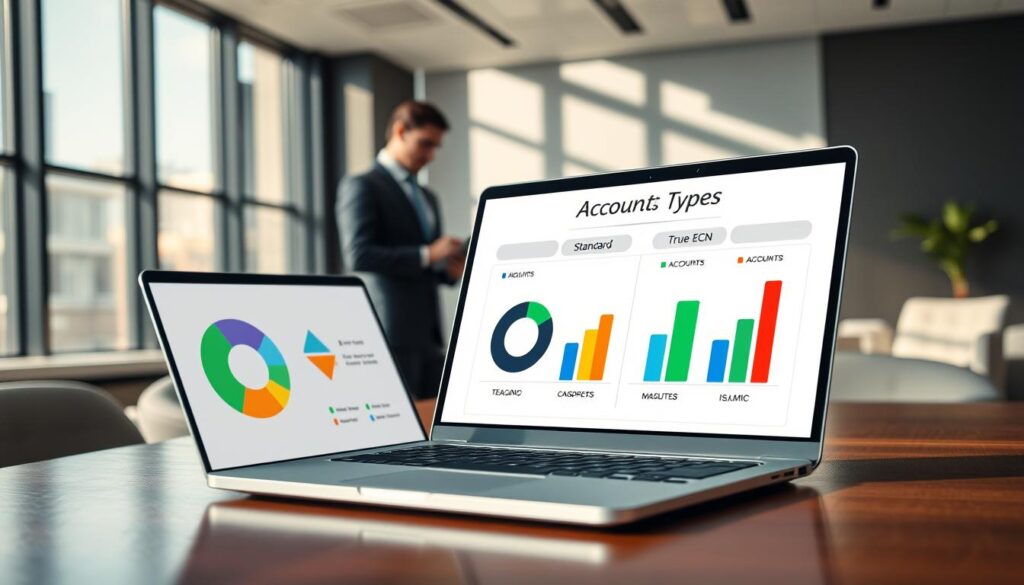
The broker offers distinct account structures, each with its own fee model tailored to different trading styles. Getting started requires a $200 minimum deposit for any live account. This initial step unlocks access to the platform’s various trading environments.
Standard Accounts vs Raw Spread Accounts
Two primary options are available to users. The standard accounts are designed for those who prefer simplicity. All costs are bundled into the variable spread, with no separate commission charges.
In contrast, the raw spread accounts offer much lower starting spreads. This model suits active traders who value transparent pricing. However, it applies a clear commission for every standard lot traded.
Commission Structures and Cost Breakdown
Understanding these fees is critical for aligning your account choice with financial goals. The commission-based model provides a clear view of per-trade expenses. This transparency helps in precise cost management and strategy planning.
The firm ensures that trading costs remain consistent across global operations. Whether you choose a standard or raw spread account, knowing the full fee breakdown is essential. It allows you to calculate potential profits and losses more accurately before you execute any trade.
In-Depth Analysis of Forex Spread Costs

The competitiveness of a broker often hinges on the tightness of its spreads and the clarity of its commissions. A detailed look at these costs shows how they affect every transaction.
This breakdown is vital for anyone involved in currency markets. It helps traders choose the right account for their strategy.
Variable Spread Markup in Standard Accounts
Standard accounts simplify the fee structure for users. All trading costs are built into the variable spread.
This means there is no separate commission charged per trade. The quoted price already includes the broker’s fee.
This model offers predictability for those who prefer straightforward pricing. It removes the need for complex calculations during fast-paced sessions.
Low Spreads in Raw Spread Accounts on MetaTrader and cTrader
For active participants, raw spread accounts provide much lower starting points. The EUR/USD pair, for example, often has an average spread as low as 0.02 pips.
On the MetaTrader platform, this comes with a clear commission. The fee is $7.00 per standard lot for a round-turn trade.
This transparency allows for precise cost management. The cTrader platform uses a slightly different commission model. It can result in a lower total price for high-volume activity.
By maintaining these tight spreads, the platform keeps forex expenses minimal. This is a major advantage for day traders and scalpers.
Comparative Look at Trading Expenses and Competitiveness

Evaluating overall trading expenses requires a side-by-side comparison with industry benchmarks. The firm consistently ranks among the top brokers for its exceptionally narrow pricing.
This competitive edge is a direct result of its operational model. It provides a significant advantage in the global markets.
Spread Costs Compared to Industry Averages
When measured against sector norms, the cost structure is highly competitive. The average spread on major pairs often beats the industry standard.
This performance is sustained by routing orders to nearly two dozen liquidity providers. Such deep liquidity ensures stable pricing, even during volatile sessions.
Cost Efficiency for Day Traders and Scalpers
For professionals executing high-frequency strategies, every pip saved is crucial. The low spread environment drastically reduces transaction friction.
Active traders who surpass 100 standard lots monthly unlock specialized pricing discounts. This further enhances cost efficiency for scalpers. The model successfully challenges other major brokers by offering superior execution conditions.
Advanced Trading Platforms and Execution Efficiency
Modern traders demand more than just low costs; they require powerful tools and lightning-fast execution. The choice of software is a major decision that impacts every aspect of a trading strategy.
A robust technological setup separates the average from the exceptional. It provides the reliability needed for confident decision-making.
MetaTrader 4/5 and cTrader Features
The MetaTrader trading platform is a global standard. It offers advanced charting tools and full support for automated trading systems.
Its servers are hosted in the Equinix NY4 Data Centre in New York. This strategic location is key for North American users.
The cTrader platform serves as a powerful alternative. It connects to the LD5 IBX Equinix Data Centre in London.
This gives European traders deep liquidity and a streamlined interface. Both platforms are accessible on desktop and mobile devices.
Low Latency and Fast Order Execution
Speed is critical in fast-moving markets. The proximity to major financial hubs minimizes data travel time.
This low-latency environment ensures trades are filled almost instantly. It is a vital feature for professionals who cannot afford delays.
Each trading platform is engineered to process multiple orders at once. Traders can manage complex portfolios without system lag.
You can monitor and act on opportunities at any time of day. Fast, reliable execution turns a good plan into a profitable one.
Evaluating Overnight Funding and Swap-Related Costs

Holding a trade open overnight introduces additional costs that every trader must factor into their strategy. These fees, known as swaps or overnight funding, apply when a position is held past the daily cutoff time.
Managing these expenses is crucial for anyone involved in long-term trading. They can quietly eat into profits over multiple days.
Impact of Triple Swaps on Trades
A triple swap is typically charged on Wednesdays for forex pairs. This adjustment accounts for the weekend when financial institutions are closed.
It effectively rolls three days of funding into one charge. Traders need to be aware of this mid-week cost spike.
Planning around these days can help mitigate unexpected expenses. It’s a standard practice across the industry.
Calculating Swap Fees with IC Markets’ Formula
The swap rate is determined by the interest rate differential between the two currencies in a pair. Each currency has its own underlying funding rate.
Traders can use the official formula provided by the firm to calculate exact costs. The calculation considers the number of days a position remains open.
This transparency allows for precise forecasting of holding expenses. For those who require it, Islamic accounts are available.
These special accounts operate on a swap-free basis. They ensure no interest is charged on open positions, aligning with specific religious principles.
Understanding and managing these costs is essential for all account types. Swap adjustments can significantly impact the net profitability of a held position over time.
Understanding Non-Trading Expenses and Service Fees

Beyond the direct costs of placing trades, several administrative fees can affect your account balance over time. These charges are not tied to market activity but are part of maintaining an active account.
It is crucial for traders to understand them fully. This knowledge helps in protecting your capital from unexpected deductions.
Deposit, Withdrawal, and Inactivity Charges
Moving your money into a trading account is straightforward. The firm does not charge any fee for depositing funds.
This allows customers to start trading without an upfront cost. Your deposited money goes directly to your available balance.
However, an inactivity fee applies if an account is dormant. A charge of $10 is levied on any account not used for six months or longer.
This fee helps cover administrative costs for maintaining inactive profiles. It is a standard practice across the industry.
Withdrawal requests are handled by the customer service team. They are processed up to 12:00 AEST on business days.
The money may still take several days to reach your bank. This depends on your payment provider and location.
For automated trading, a Virtual Private Server (VPS) can be essential. The service costs between $25 and $60 per month.
This ensures your automated systems run without interruption. It is a valuable tool for serious traders.
Monitoring these non-trading fees is a key part of account management. It ensures your funds are not depleted by avoidable charges.
Exploring Copy Trading and Social Trading Tools

Social trading tools have transformed how individuals participate in financial markets by allowing them to mirror expert strategies. These services provide a valuable bridge for newcomers to learn from experienced professionals.
IC Social and Third-Party Copy Trading Platforms
The broker’s proprietary IC Social platform is powered by Pelican Exchange. It enables clients to automatically copy the trades of successful signal providers.
Performance fees for these strategies can reach up to 50% of the profits generated. This model aligns the interests of both the follower and the professional trader.
The firm also supports third-party tools like ZuluTrade. This expands the range of available social trading options for all users.
These integrated services help less experienced participants benefit from established expertise. Risk management tools are built into the platform to protect client capital.
This secure environment makes social trading accessible and controlled. The broker markets offers a comprehensive solution for those seeking collaborative investment approaches.
Assessing Customer Service, Research, and Educational Resources

A broker’s value extends beyond pricing to include the quality of support and learning materials it offers. These elements are crucial for both beginners and experienced traders seeking to enhance their strategies.
Support Quality and Educational Content
The customer service team is available around the clock to provide assistance. This ensures every customer receives timely support for their inquiries.
High-quality educational information is available through the firm’s website. It includes over 100 articles and various video tutorials.
The broker provides daily market analysis and technical forecasts. This is a valuable service for those looking to stay informed about global financial trends.
By offering a dedicated customer service channel, the firm ensures users can resolve issues quickly. The information hub is a key resource that markets provides to help traders improve their skills.
Access to reliable information and responsive support can significantly improve trading outcomes. The podcast series “IC Your Trade” offers additional insights for continuous learning.
Final Insights and Key Takeaways for UK Traders
UK traders looking for a cost-effective solution will find the broker’s offerings align well with both beginner and professional requirements. After years of operation, it remains a top choice for those prioritizing low fees and high liquidity.
The availability of MetaTrader and other advanced platforms supports complex forex strategies. With a $200 minimum deposit, account options are accessible to a wide range of participants.
The pricing structure, including commission-based raw accounts, ensures competitive costs against global brokers. UK traders should also consider the regulatory protections and specific currency pairs when managing funds.
This careful evaluation helps safeguard your money and maximize potential returns. The platform provides a versatile environment for day trading and long-term positions.
Ultimately, the combination of advanced instruments, reliable leverage, and transparent pricing makes this firm a standout in the financial landscape.