For retail investors in the United Kingdom and across global financial arenas, selecting a reliable brokerage partner is a fundamental decision.
This analysis delves into the core factors that determine a firm’s trustworthiness and operational security.
Independent research from ForexBrokers.com awards the broker a Trust Score of 83 out of 99. This high rating provides a strong, quantitative foundation for evaluating its reliability.
Our comprehensive review examines the regulatory framework and licensing status across multiple international jurisdictions.
We assess the operational history and the specific protocols in place for client fund protection. The goal is to deliver a clear, current overview of the trading environment’s security for all participants.
Readers will gain insights into risk management practices and the overall stability offered by this established entity.
Company Background and Overview
The broker’s journey began in 2007, building a reputation for high-volume execution and technological stability. This firm focuses on serving professional and retail traders across global financial arenas.
History and Years in Operation
Founded in 2007, the entity has operated for nearly two decades. Its long tenure demonstrates commitment to the trading community.
The company name became synonymous with high-frequency trading environments. Its brand name carries significant weight in financial circles. Participants rely on its rapid order processing and stable infrastructure.
Global Presence and Market Reputation
Over the years, the broker expanded its global footprint. It now maintains entities in Australia, Cyprus, and the Seychelles.
This international network supports low-latency trading solutions for users across various time zones, and consistent performance bolsters its market reputation.
The firm continues to operate as a private entity. This provides a distinct position compared to publicly listed financial institutions.
Regulatory Compliance and Global Licensing

Navigating the complex landscape of financial regulation is crucial for any trader evaluating a brokerage. The firm’s authorization by the Australian Securities & Investment Commission (ASIC) represents a cornerstone of its compliance framework. This Tier-1 regulator enforces rigorous standards for client fund safety and operational transparency.
Overview of Tier-1 and Tier-4 Licenses
The broker maintains a global licensing structure with two Tier-1 and three Tier-4 authorizations. Tier-1 licenses, like that from the Australian Securities Investments Commission, offer the highest level of oversight. They mandate segregated client accounts and regular financial audits.
Tier-4 regulators provide a different framework, often with fewer mandatory protections. The specific investments commission overseeing each entity defines the applicable rules. Traders should always verify which local authority governs their account.
Implications for UK Traders
For residents of the United Kingdom, a key consideration emerges. The brokerage does not hold authorization from the UK Financial Conduct Authority. Consequently, accounts opened through its global entities fall outside the UK’s Financial Ombudsman Service jurisdiction.
Client protection levels depend entirely on the licensing entity chosen during registration. The Australian Securities Investments Commission’s rules apply only to accounts under its direct supervision. This distinction is vital for making an informed choice.
In-Depth Review: is ic markets safe

To truly gauge a firm’s reliability, one must dissect its trust scoring and inherent operational risk factors. This section provides a granular look at the quantitative metrics and comparative analysis that define the security landscape.
Trust Score Methodology and Analysis
The proprietary Trust Score system provides a data-driven foundation for evaluation. It aggregates information from over 100 international regulatory agencies to generate a composite rating.
Core components of this methodology include:
- Regulatory licensing tier and oversight history.
- Operational longevity and capital adequacy requirements.
- Transparency of client fund protection policies.
A score of 83 out of 99 reflects a high standard of compliance and operational integrity. This quantitative result offers a clear, objective benchmark for traders.
Comparative Risk Considerations
Understanding the risk profile requires looking beyond the score. The entity operates as a private, non-publicly traded financial firm. This capital structure presents a different dynamic compared to listed competitors.
Counterparty risk management is crucial, especially during periods of high market volatility. The firm’s protocols for handling such events are part of the overall assessment.
Ultimately, a client’s exposure level is directly tied to the specific regulatory jurisdiction governing their account. Comparing these protections against global industry standards completes the safety picture.
Account Types, Minimum Deposit and Funding Options
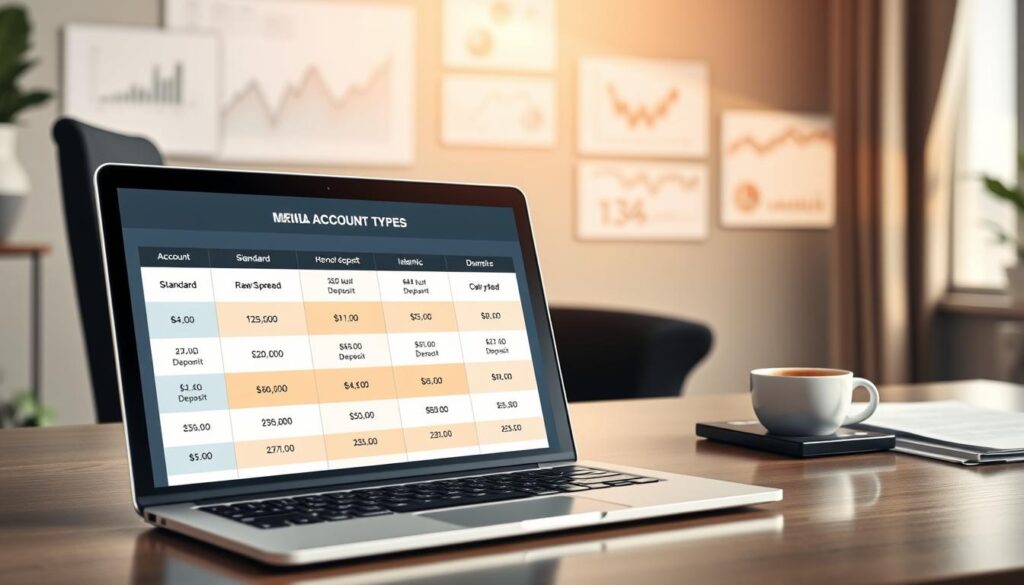
A brokerage’s accessibility and funding options form the practical gateway for new participants. The choices made here directly influence cost structures and strategic flexibility.
Commission-Based vs. Spread-Only Accounts
Traders can select from three primary account structures. These cater to distinct styles and volume levels.
- Standard Account: A spread-only model with no per-trade commission.
- Raw Spread Account: Offers tighter spreads but includes a commission fee.
- cTrader Raw Spread Account: Designed for algorithmic trading with raw pricing.
The spread-only option simplifies cost calculation for beginners. Commission-based accounts often benefit high-volume participants seeking lower spreads.
Deposit Methods and Minimum Requirements
A $200 minimum deposit applies to start a live account. This requirement remains the same across all account types.
Funding is straightforward with several trusted methods. Clients can move money via bank wire, PayPal, or Skrill. These options allow for efficient transfers to begin trading.
This low financial barrier supports easy entry for retail traders. It allows testing strategies with real capital without a large upfront commitment.
Detailed Trading Fee Structure and Cost Efficiency

A clear breakdown of trading fees allows participants to forecast expenses and optimize their strategies. Transparent cost structures are fundamental for long-term profitability in financial arenas.
This broker provides several account models with distinct pricing. Each model caters to different volume levels and trading styles.
Commission Rates on Different Platforms
The Raw Spread account charges a commission of $3.5 per side for every 100,000 units traded. This totals $7.00 for a complete round turn.
Users of the cTrader Raw Spread account benefit from a slightly lower rate. Here, the commission falls to $3.0 per side.
These competitive fees help keep overall costs manageable. They are a key factor for participants who execute frequent orders.
Discounts for Active Traders
High-volume traders can access additional cost savings. Clients who trade over 100 standard lots per month may qualify for specific fee discounts.
This incentive rewards consistent market activity. It enhances overall cost efficiency for professional and serious retail traders.
By minimizing fees, the trading environment remains attractive. It supports strategies that rely on high execution frequency.
Trading Platforms, Tools and Algorithmic Options

The technological backbone of any modern brokerage lies in its selection of trading platforms and analytical tools. Access to robust software defines the practical experience for every participant. These systems enable precise order execution and complex strategy management.
MetaTrader 4, MetaTrader 5, and cTrader Analysis
The broker provides industry-standard platforms. MetaTrader 4 remains a popular choice for its extensive library of expert advisors. MetaTrader 5 offers advanced built-in indicators and economic calendar tools.
cTrader delivers a sleek interface with raw pricing for professional users. All three platforms support sophisticated algorithmic trading systems. This allows for automated strategy execution around the clock.
Third-Party Plugins and Advanced Trading Tools
Additional resources significantly enhance technical analysis capabilities. The FX Blue package offers advanced charting and performance analytics. Plugins from Autochartist help identify potential chart patterns automatically.
Integration with TradingView provides powerful web-based charting and backtesting features. These tools are designed for speed and reliability. They ensure automated strategies execute without unnecessary delays.
This comprehensive ecosystem supports a wide range of trading activities. From simple manual trades to complex high-frequency systems, the necessary tools are available.
Mobile Trading Apps and On-the-Go Experience

For professionals and retail clients alike, a robust mobile trading experience is no longer a luxury but a fundamental expectation. The ability to react instantly to market shifts defines success in fast-moving financial arenas.
Native applications deliver this essential connectivity. Traders can manage portfolios and execute orders directly from their smartphones.
App Functionality for iOS and Android
Dedicated apps for both iOS and Android devices support this on-the-go trading lifestyle. Each platform mirrors core desktop functionalities within a streamlined mobile interface.
Key mobile features include:
- Advanced charting packages with over 30 technical indicators and drawing tools.
- Customizable price alerts and real-time watchlist monitoring.
- Full account management for deposits, withdrawals, and position tracking.
The mobile experience prioritizes speed and clarity. Users report a fluid interface that performs well even while travelling.
It is important to note a key limitation. The mobile apps do not support the full suite of algorithmic trading tools available on desktop.
Despite this, the overall mobile trading package remains highly effective. It provides reliable market access whenever and wherever needed.
Investment Product Range and Asset Coverage

The breadth of available financial instruments defines the scope of opportunities for any active participant. This broker provides an extensive selection of 3,583 tradeable symbols across global markets.
This vast catalogue spans major asset classes including forex, indices, and commodities. Such a wide selection supports diverse portfolio strategies and risk management.
Cryptocurrency trading is available through CFD products. These contracts allow speculation on price movements without owning the underlying digital asset.
The firm’s CFD options are diverse, enabling clients to build balanced portfolios. Key categories in the product range include:
- Forex pairs from major, minor, and exotic currencies.
- Global stock indices and commodity futures.
- Cryptocurrency CFDs like Bitcoin and Ethereum.
- Individual share CFDs, with specific focus on Australian stocks via the IC Shares offering.
Asset coverage includes global equities, though direct share trading focuses on specific markets. This broad product range makes the broker a versatile choice for those looking to diversify their trading activities.
Market Research, Analysis and Trading Signals

Staying ahead in fast-moving financial markets requires reliable analysis and timely signals. The brokerage provides a comprehensive suite of research services designed to empower participants.
Daily Market Commentary and Technical Analysis
A dedicated research department publishes daily market commentary. This resource covers fundamental events and price-driven technical setups.
Traders receive regular updates directly on the firm’s blog. The analysis helps users refine their strategies with current data.
Integration of Autochartist and Trading Central Resources
Powerful third-party tools add significant value. Integration with Autochartist and Trading Central delivers actionable trading signals.
These automated systems scan for chart patterns and key levels. The generated alerts serve as a foundation for strategic decisions.
The IC Your Trade series offers high-quality video content and articles. This program acts as a valuable resource for ongoing education.
Live trading sessions and Web TV clips are available on YouTube. This visual support caters to those who prefer learning by example.
Together, these research services provide a complete view of the market. They assist both novice and experienced participants in their analysis.
Educational Materials and Learning Resources
Access to high-quality educational materials distinguishes a supportive brokerage from a basic platform. This firm provides a substantial library to aid client development.
Beginner Guides and Advanced Trading Videos
The educational library contains over 100 written articles and dozens of videos. This collection represents a solid choice for skill improvement across all trading levels.
Beginners find value in guides like Forex Trading 101. Advanced users benefit from specialized video content. Archived webinar recordings deepen the learning experience.
IC Your Trade Series and Webinar Offerings
The IC Your Trade podcast series offers an engaging way to learn about market dynamics. It delivers professional trading experience through audio and video formats.
These resources support a comprehensive journey for all accounts. While a demo account is available for practice, the educational content could be enhanced.
Adding progress tracking would improve the experience. Structured quizzes could test knowledge from the guides.
Overall, these materials show significant effort to support client learning. More personalized educational routes represent a future choice for development.
Customer Support, Client Reviews and Service Efficiency
In the dynamic world of online trading, the quality of client assistance can make or break a participant’s journey. A reliable customer support team provides the necessary backbone for a smooth trading experience.
Testimonies Reflecting Quick and Helpful Support
Many client reviews consistently highlight the team’s efficiency. Users frequently report that issues get resolved in mere seconds.
This support extends across multiple channels, including live chat and WhatsApp. Whether handling a withdrawal query or a login difficulty, the staff excels in professionalism.
Their clear communication makes complex procedures easy to understand. This reliable service builds immediate confidence for every customer.
Impact of Support on Overall Trading Experience
The quality of assistance has a direct effect on the user’s trading experience. Prompt and helpful interactions foster long-term trust and reliability.
This support structure ensures clients feel assisted throughout their entire journey. Positive testimonies reflect a high satisfaction level with the service provided.
Such dependable customer care becomes a cornerstone of the broker’s reputation. It is essential for maintaining a productive client relationship over many years.
Risk Management, Execution Methods and Counterparty Considerations
The broker’s approach to order execution fundamentally shapes a trader’s exposure to market dynamics. The chosen methods determine price transparency and counterparty relationships.
Agency vs. Dealer Execution Analysis
This firm utilizes agency execution methods. Orders route directly to liquidity providers, bypassing a traditional dealing desk.
Nearly two dozen different liquidity providers receive these orders. The broker acts as a counterparty but manages risk through this diversified network.
This model promotes fair pricing for CFD trading. It contrasts with dealer execution where the broker may take the opposite side of a trade.
Managing Slippage and Positive/Negative Execution Risks
Trading during high volatility often leads to slippage. Orders may fill at better or worse prices than expected.
Understanding this execution risk is vital for managing money. The broker does not hedge every single trade on its own books.
Transparent methods allow participants to anticipate these scenarios. They can adjust strategies accordingly for more reliable CFD trading outcomes.
Wrapping Up Insights and Final Observations
The ultimate assessment hinges on aligning a firm’s strengths with an individual’s specific needs and risk profile. This review highlights both compelling advantages and important considerations for participants in global financial markets.
The broker remains a premier selection for algorithmic trading, demanding a robust execution structure and competitive pricing. Its combination of high-quality platforms and efficient support creates a strong contender for those prioritizing performance in active markets.
Investors must recognize that the safety of client funds depends heavily on the specific regulatory entity overseeing their account. Eligible retail clients in the European Union may receive protection for up to 20,000 euros during bankruptcy proceedings.
The firm operates as a private entity, not a publicly traded bank, which affects its capital structure. While offering excellent tools and low costs, verifying available regulatory protections in your jurisdiction is essential for safeguarding funds.
The final decision to engage in trading should follow a thorough evaluation of personal financial goals and risk tolerance by all investors.