Gold has long been a symbol of wealth and stability. In recent years, it has gained attention as a critical asset in financial markets. Understanding how to navigate gold trading is essential for both novice and experienced investors.
Since 2015, gold prices have shown a tendency to move sideways. However, 2024 marks a significant shift, introducing larger price swings and a clear upward trend. This change has transformed how traders approach the market, making it vital to grasp the factors influencing these fluctuations.
For many, gold serves as a safe haven during periods of economic uncertainty. It offers stability when other assets falter. By analyzing historical data, investors can learn how gold reacts to shifts in central bank policies and global economic events.
Successful engagement in this market requires a disciplined approach. Combining fundamental insights with technical analysis can reveal potential profit opportunities. With the global nature of gold markets, participants can trade across various time zones, reflecting real-time changes in price.
Introduction to Gold Trading and Market Dynamics
Gold remains a trusted asset in times of economic uncertainty and market fluctuations. Its reputation as a safe haven makes it a popular choice among investors, especially during geopolitical tensions.
Gold trading is widely followed because it acts as a lifeboat for investment portfolios. It helps maintain value when market volatility rises significantly. During the period from 2020 to 2023, gold prices experienced notable fluctuations, heavily influenced by global events and central bank policies.
The inherent scarcity of gold makes it an effective hedge against inflation and currency debasement. This quality preserves purchasing power for long-term investors and traders alike.
Additionally, the global market liquidity for gold is exceptionally high. This liquidity is supported by a diverse participant base, including institutional investors, central banks, and retail traders. Extended trading hours allow participants to enter and exit positions easily, ensuring that the gold market quickly reflects major macroeconomic changes.
XAUUSD Trading: Key Concepts and Risk Management

To excel in gold trading, one must understand both market behavior and risk factors. This understanding is crucial for making informed decisions. Traders can take two main positions: long or short.
Going long means buying gold with the expectation that prices will rise. Conversely, going short involves selling gold to profit from anticipated price declines. Both strategies are essential for navigating the gold market effectively.
Effective risk management is vital for success. Here are some key strategies:
- Implementing stop-loss orders protects capital from significant losses during unexpected market moves.
- Defining risk tolerance ensures every position aligns with the trader’s overall strategy.
- Take-profit orders lock in gains automatically when prices reach a predetermined level.
- Proper position sizing maintains a healthy risk-to-reward balance, especially in volatile markets.
By mastering these concepts, traders can navigate the complexities of gold trading while minimizing the impact of adverse price movements.
Trading Strategies for Gold in Forex Markets

Mastering gold trading involves leveraging diverse strategies to maximize opportunities. Traders can choose from various methods to engage with the gold market effectively.
One popular approach is trend-following. This strategy focuses on riding the momentum of the market in a specific direction. By identifying trends, traders can make informed decisions about when to enter or exit positions.
Another effective technique is swing trading. This involves buying near support levels and selling near resistance levels over several days. This strategy allows traders to capture price swings, enhancing potential profits.
Combining technical analysis with fundamental insights is crucial. Technical analysis helps traders interpret price and volume data, while fundamental insights, such as changes in central bank policies, provide essential context. This dual approach minimizes risks associated with relying solely on one method.
- Trend-following strategies allow traders to capitalize on established market momentum.
- Swing trading techniques enable capturing price movements over a few days.
- Scalping is a method for high-frequency traders looking to profit from short-term price fluctuations.
- Successful traders adapt their strategies based on current market conditions.
Leveraging Gold CFDs for Flexible Trading

CFDs offer a modern approach to engaging with gold markets, allowing traders to capitalize on price movements without the need for physical ownership. This method reduces costs associated with storage and security, making it an attractive option for many.
One of the main advantages of gold CFDs is their flexibility. Unlike physical gold, which requires secure storage and delivery, CFDs enable traders to enter and exit positions with ease. This flexibility is essential in a fast-paced market.
Moreover, CFDs allow for two-way trading. This means traders can profit whether prices are rising or falling. The use of leverage is another key benefit, as it allows traders to control larger positions with a smaller capital outlay, enhancing capital efficiency.
However, it is important to remember that while leverage can amplify profits, it also increases potential losses. Therefore, careful risk management is crucial. Additionally, many brokers, like Pepperstone, offer nearly round-the-clock trading for gold CFDs, catering to both high-frequency and swing traders.
By utilizing CFDs, traders can gain exposure to gold price movements without the complexities of owning or storing physical gold bullion, making it a compelling choice in today’s market.
Analyzing Gold Price Drivers and Economic Indicators

Understanding the forces that drive gold prices is crucial for any investor. Several economic factors play a significant role in shaping these prices, making it essential for traders to stay informed.
One major influence is interest rates. When central banks adjust rates, it directly impacts gold’s attractiveness. Higher interest rates can reduce gold’s appeal as a non-yielding asset.
Impact of Interest Rates and Inflation
As inflation expectations rise, gold becomes more appealing as a store of purchasing power. This often leads to increased demand from global traders. Monitoring real interest rates, which are nominal rates minus inflation, is vital for understanding gold’s long-term investment appeal.
Geopolitical Risks and Market Sentiment
Geopolitical risks, such as sudden conflicts or trade uncertainties, frequently prompt traders to increase their gold holdings. The strength of the dollar also plays a critical role, as gold is priced in USD. A stronger dollar can exert downward pressure on gold prices, making it more expensive for foreign buyers.
- Interest rates are among the most important variables affecting gold.
- Central bank purchases, especially by emerging markets, support gold prices.
- Monitoring macroeconomic data helps traders anticipate gold price reactions.
Technical Analysis Tools for Gold Trading
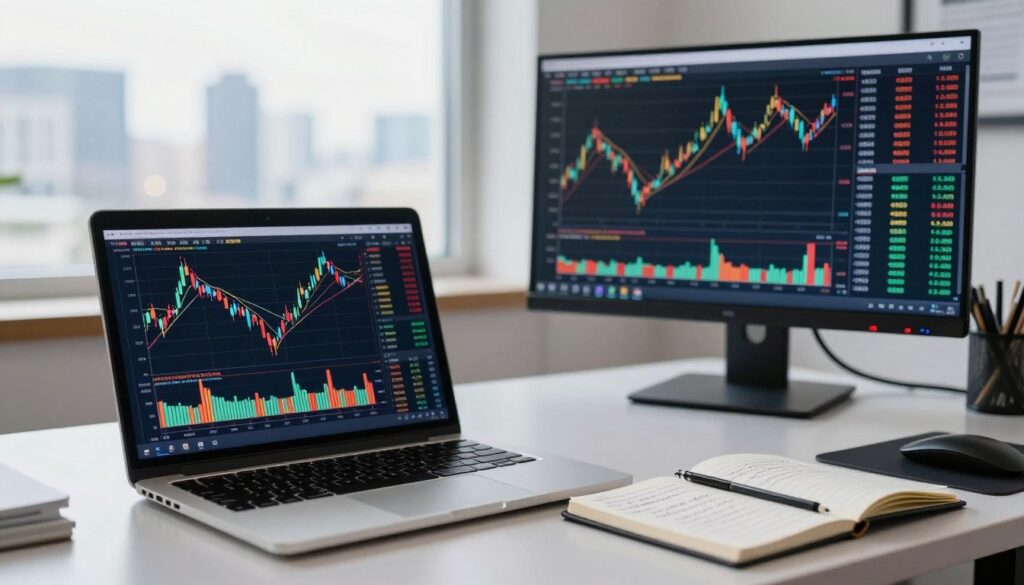
Utilizing technical analysis tools can significantly enhance a trader’s ability to forecast gold price movements. These tools provide insights into market behavior, helping traders make informed decisions.
Identifying Support, Resistance, and Trendlines
Support and resistance levels are critical for gold traders. They represent areas where prices may find a floor or face selling pressure. Trendlines also play a vital role, helping to identify the market’s dominant direction.
Utilizing Oscillators and Candlestick Patterns
Oscillators, such as the 14-day RSI, indicate when gold might be overbought or oversold. Candlestick patterns, like hammers or engulfing patterns, offer clues about potential trend reversals or continuations.
Applying Fibonacci Retracement for Target Levels
Fibonacci retracement tools are invaluable for calculating target levels. Traders can use these levels, such as 38.2% and 61.8%, to identify potential pullback or consolidation zones.
By leveraging these technical tools, traders can transform fuzzy intuition into actionable rules for executing their gold trading strategies effectively.
Building a Robust Trading Framework
Creating a solid framework for trading is essential for navigating the complexities of the gold market. This framework should encompass a macro assessment of the economic environment, monetary policy trends, and overall market sentiment.
Traders should choose a regulated broker like Pepperstone and fund their account to access real-time gold CFD prices for their analysis. This access is vital for making informed decisions.
Integrating technical confirmation with risk rules ensures that every trade is backed by clear evidence. This adherence to strict stop-loss logic is crucial for effective risk management.
Using a trading platform such as MT4, MT5, or TradingView allows for seamless integration of technical analysis tools into the trading workflow. A standardized preparation workflow helps traders maintain discipline.
Once comfortable with the platform, traders should establish clear rules and test their strategies in a risk-free environment before executing live trades. Effective decisions in gold trading come from combining technical analysis with fundamental insights.
Navigating Global Trading Sessions: London & New York

The London and New York trading sessions are pivotal for gold traders seeking to optimize their strategies. These periods often experience the highest liquidity and volatility, making them crucial for effective market engagement.
During these sessions, significant price movements frequently occur, offering traders opportunities to capitalize on market dynamics. Understanding the overlap between these sessions can enhance trading effectiveness.
Session Overlaps and Their Influence on Price Movements
- Gold prices often react significantly to news releases during the active hours of the London and New York sessions.
- The overlap between these sessions frequently leads to increased price movements, providing opportunities for short-term and swing traders.
- In early April 2025, markets anticipated a potential gold tariff, leading to large preemptive moves from the London to New York Exchange.
- By aligning their trading hours with these sessions, traders can better capture the momentum generated by global market participants.
- The influence of these sessions on gold price movements highlights the importance of being active when the market is most liquid and responsive.
Risk and Reward: Managing Market Volatility
Managing the complexities of gold markets requires a clear understanding of both risk and reward. Traders face the challenge of navigating sudden market shifts that can lead to unpredictable price changes.
Using leverage wisely is essential, as it can significantly improve capital efficiency while simultaneously increasing the potential for substantial financial losses. Therefore, effective risk management becomes crucial.
- Stop-loss orders to protect against significant losses.
- Trailing stops for locking in profits as prices move favorably.
- Take-profit orders to secure gains at predetermined levels.
Traders must always define their risk tolerance before entering a trade. This ensures they can withstand the volatility inherent in the gold market. Additionally, negative balance protection is a key feature provided by some brokers to help manage risks in high-leverage environments.
By prioritizing risk management, traders can protect their capital and lock in profits, even during periods of extreme volatility in the gold market.
Final Thoughts on Mastering XAUUSD Trading
Success in the gold market hinges on a commitment to ongoing education and adaptability. Mastering gold trading requires continuous learning, as the market is influenced by a complex interplay of global economic factors.
Traders should refine their strategies by integrating technical analysis with fundamental insights. This approach helps them stay ahead of changing market conditions.
Maintaining strict risk management is crucial for long-term survival and profitability. By utilizing the right tools and platforms, traders can execute their plans with precision across various global sessions.
The journey to becoming a proficient gold trader involves practice, patience, and adaptability to evolving gold prices. Ultimately, success in gold trading is achieved by those who remain disciplined and informed about the core drivers of the market.